
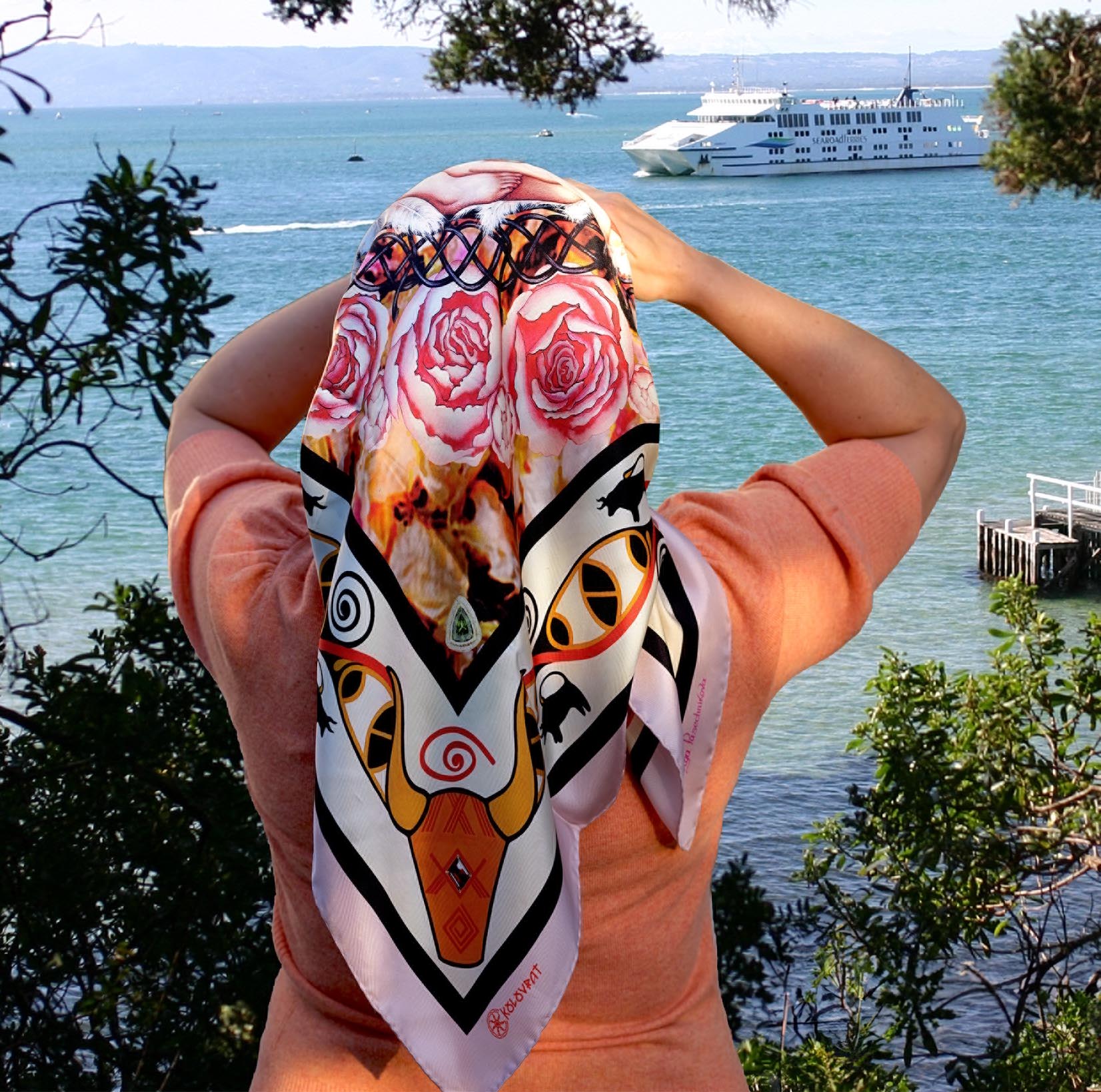
The Beginning. Silk Scarf Ideas
Part 1.
Hello my dear reader,
Since this is my first PSICHORA Blog post here, I’ve chosen to begin with The Beginning —a pure silk scarf whose design ideas is easier to explain at the start of my writing journey. It emerged from a surprising sequence of historical and scientific discoveries, each one shaping the creative process in unexpected ways.
Let us return to the heart of this scroll: the historical evidence from the Trypillia–Cucuteni culture and the data from genetic science that challenged conventional archaeological interpretations—and ultimately inspired the creation of The Beginning silk scarf.
QUESTIONS THAT STIR THE SOUL
My dear reader, you may be wondering:
- What do images of bulls have to do with a silk scarf or a fashion accessory—and how do they relate to the realistic image of a baby?
- What is the purpose of the wave-like pattern around the scarf’s perimeter, and how does it connect to the symbolic weaving of a baby’s nest-cradle?
- What do the four gemstones represent, and why are they placed in those specific positions?
- What do the rounded symbols in the scarf’s corners mean—and why were three chosen?
- And finally, what connects ancient Trypillian pottery with modern scientific evidence and PSICHORA scarves, and what makes them infused with positive energy?
These questions are completely valid and I will do my best to illuminate them for you.
POTTERY AS A PORTAL TO THE WOMB
Let’s begin with Trypillian pottery—samples we are fortunate to still have today.
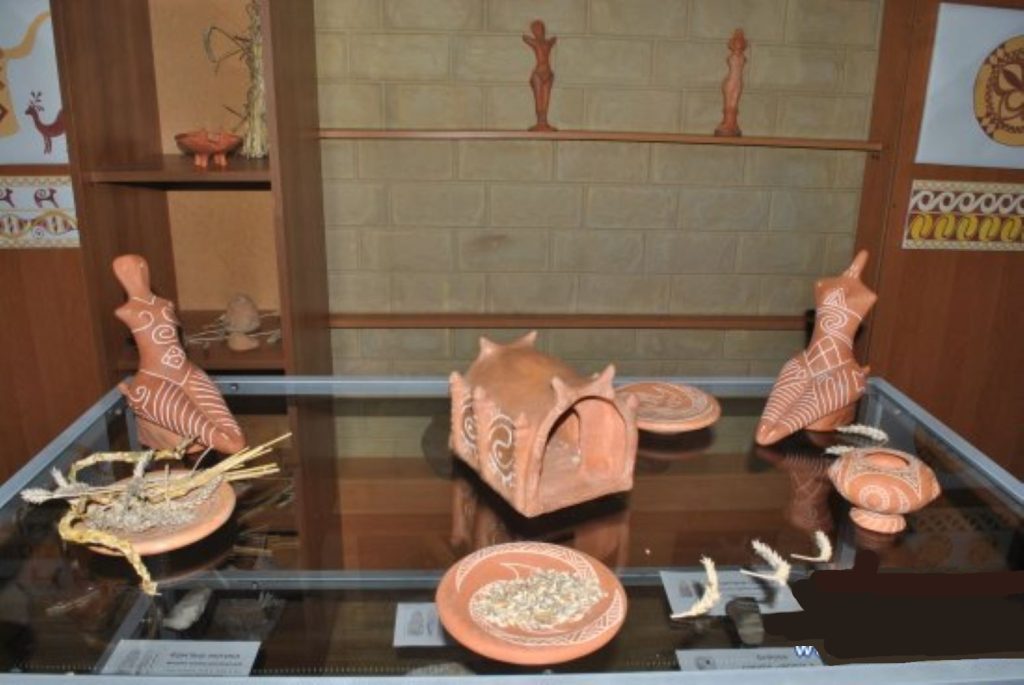
Museum of Trypillian Culture, Kyiv, Ukraine
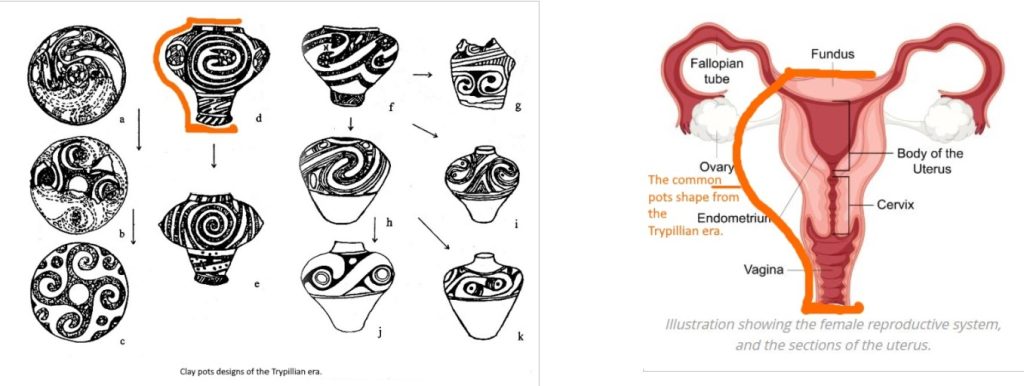
Outlined in orange, the shape of a typical Trypillian clay pot bears a striking resemblance to the uterus of a woman in late pregnancy.
Further down, we find a snake-like ceramic symbol from the same era that mirrors the image of a human embryo—captured under an advanced electronic microscope—still curled like a fish within its egg. This image obtained under an electron microscope.
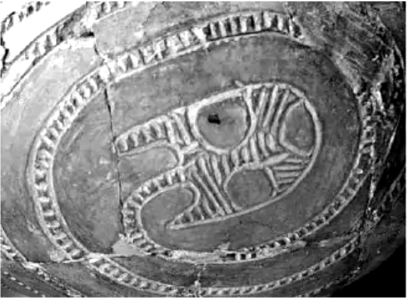
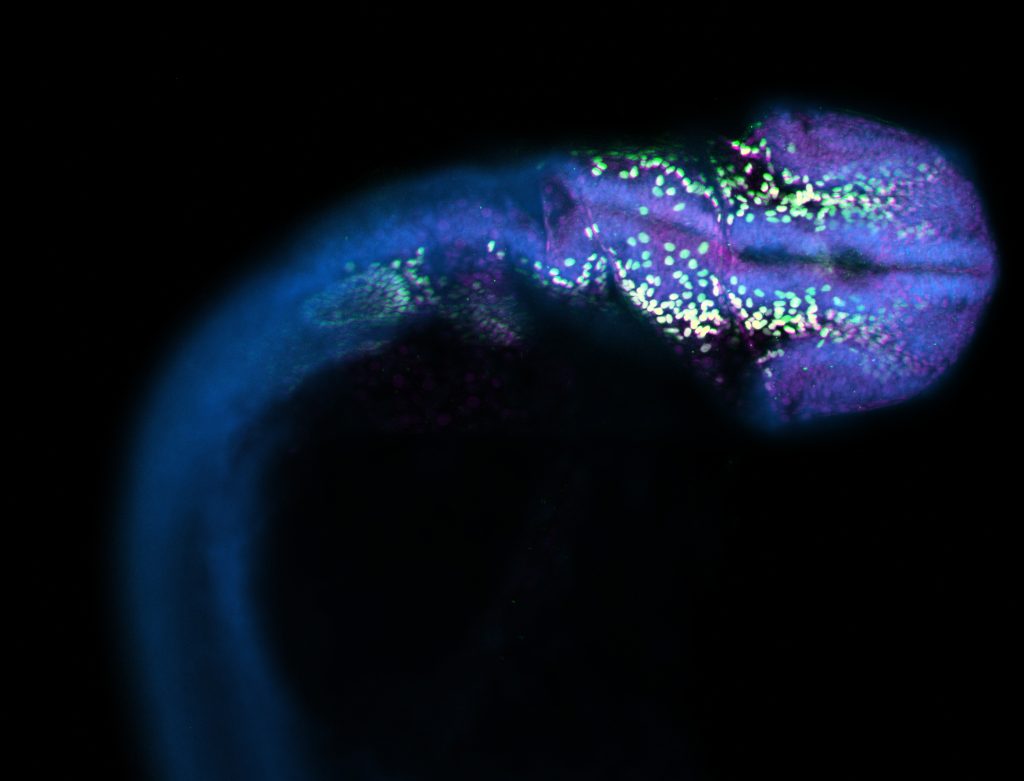
Above: Ceramic artifacts from Oleksandrivka, Ukraine and Embryo early stages taken by an electronic microscope.
Feel yourself unconvinced still? Let’s take another deep look.
Trypillian pots often feature painted images that clearly resemble cell division and an embossed embryo at early stages, symbolising fertility and abundance.
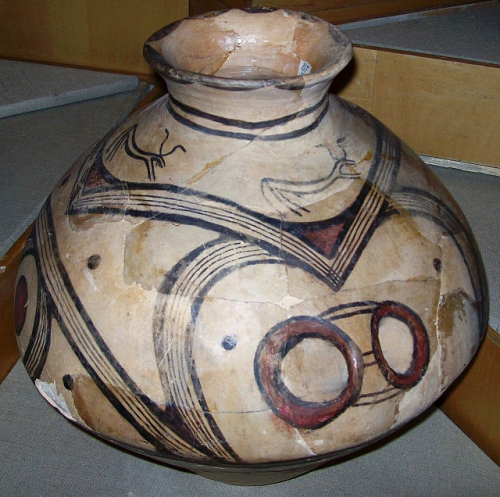
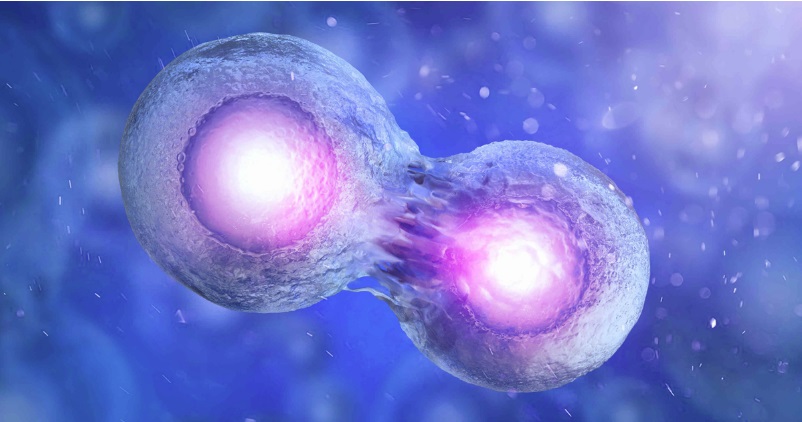
Above: Ceramic vessel from Romania and dividing cell taken by an electronic microscope.
It is now known that a fertilised germ cell undergoes 43 distinct stages before becoming a fully developed child. I cannot help but marvel: how did the Trypillia–Cucuteni civilisation know of these stages? And why did they so persistently depict them on womb-shaped vessels?
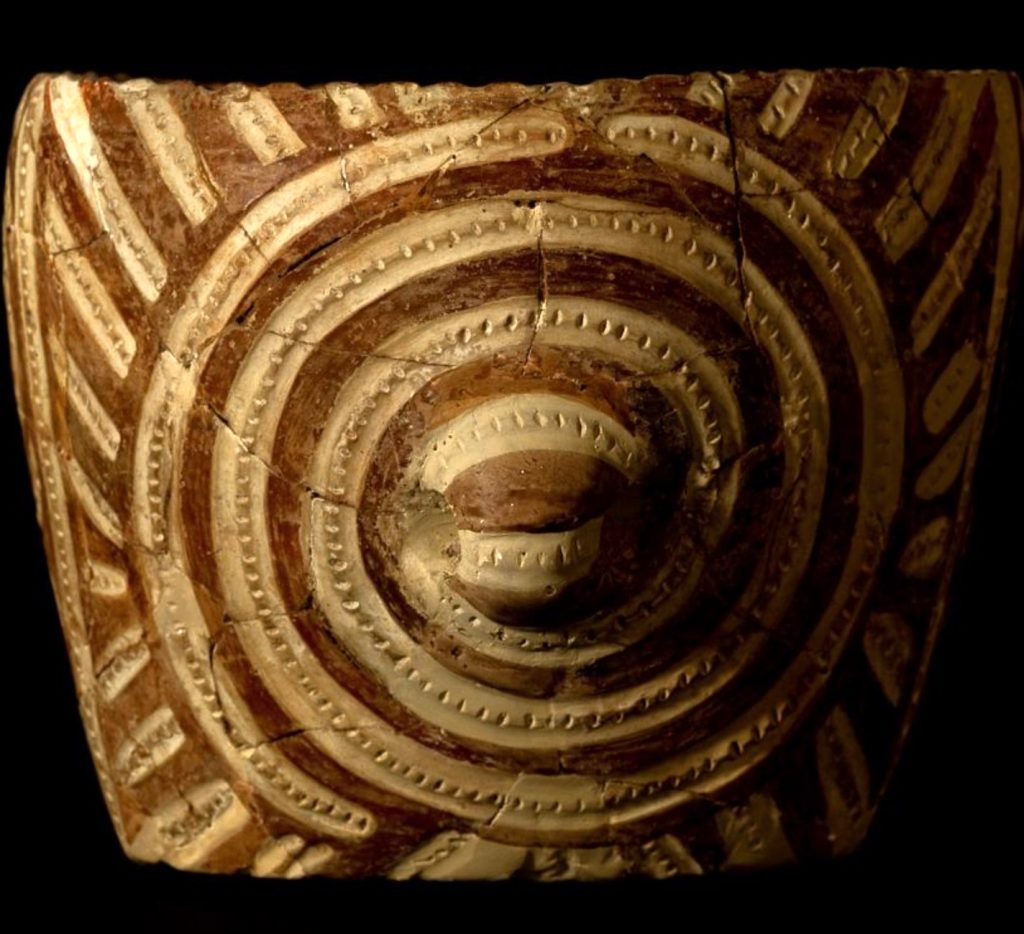
One Cucuteni pot dated to around 3500 BCE shows these 43 stages of germ-cell development in symbolic form. Modern science confirms their accuracy. These designs emphasise the sanctity of life’s creation and the sacred space in which it unfolds—the womb. This reverence explains why the Trypillians lived in a matriarchal society, where women—life-bearers and life-givers—held the highest social importance.
FROM BOTTLENECKS TO BULL SYMBOL
These designs emphasize the critical importance of the creation of life and focus on the sanctity of the place in which all these stages of transformation take place – the womb of a woman. This fact, in turn, explains why this ancient civilization of Eurasia was a matriarchal society – a society where the greatest social importance was assigned to women – life-bearers and life-givers.
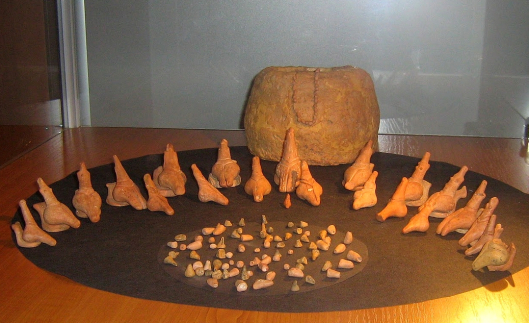
Female figurines of reconstructed Trypillia-Cucuteni ‘capische’- a place of social and ritual gathering or a sacred space. Romania
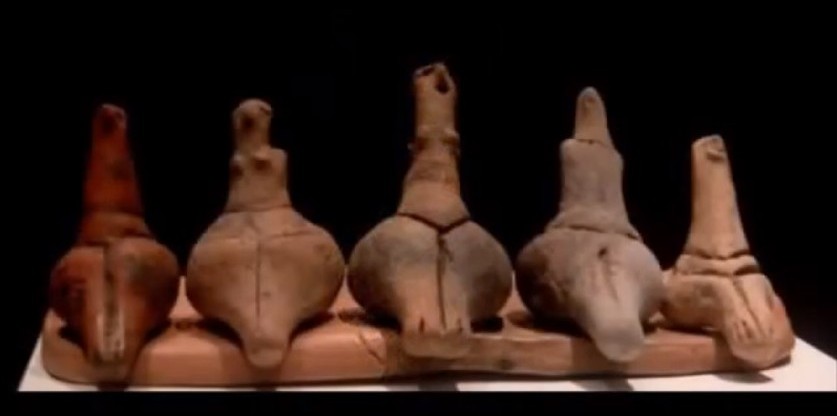
Humanity has not always faced overpopulation. Scientific evidence shows that there were times when people stood on the brink of extinction. These evolutionary bottlenecks likely occurred near the time of the Trypillia–Cucuteni civilization’s rise. I believe they inherited knowledge from a preceding culture—those who knew about genetics and the formation of cellular life in the details, proven by highly developed science, and passed it on through ceramics, used as a kind of sacred script.
Below: ‘Ukrainian Venice’- Trypillian female figurine made of hand-painted fired clay/terracotta. Approx. 5000-4500 BC
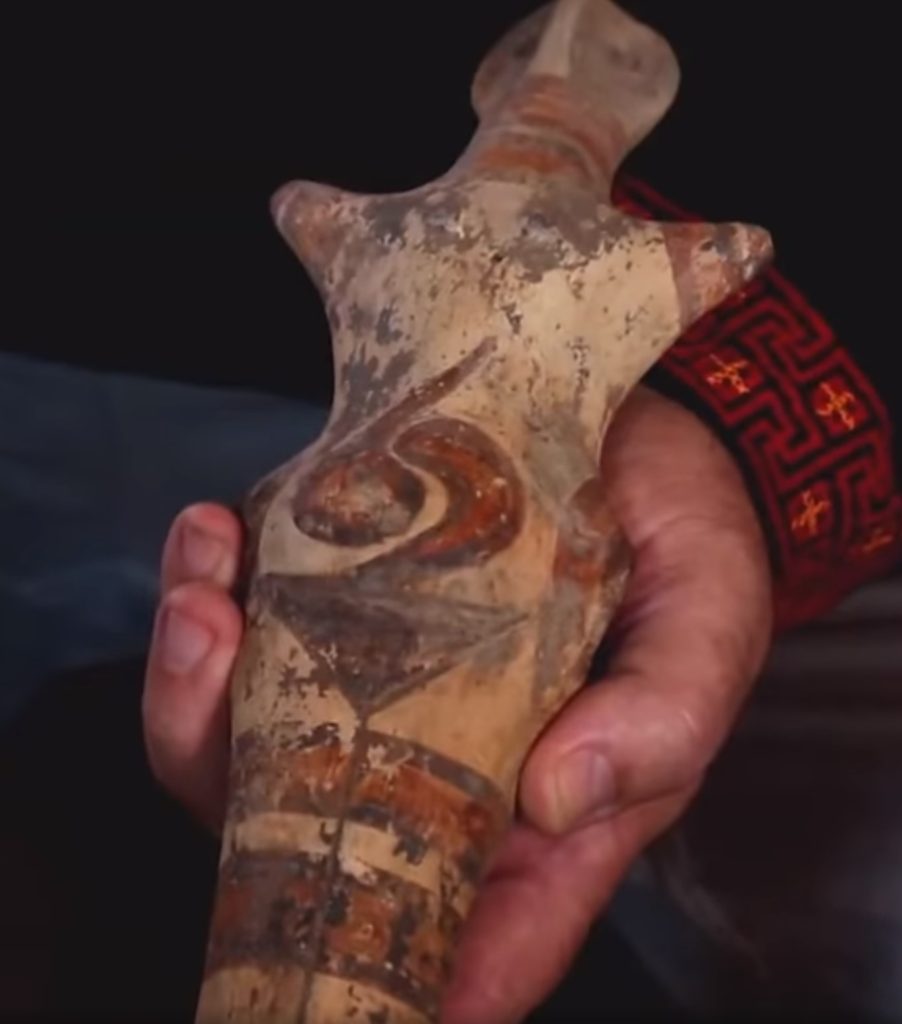
And now we are coming to the images of bulls seen in such a remarkable plenty all over on those uterus-like pots of Trypillian pottery. What a bull has to do with a human’s life formation? I found that there are two relations to this bull phenomena explanations: one corresponds to an animal a bull. Let’s start with a bull an animal who was cherished for its extreme physical endurance, strong protection of its kind and remarkable fertilising potency.
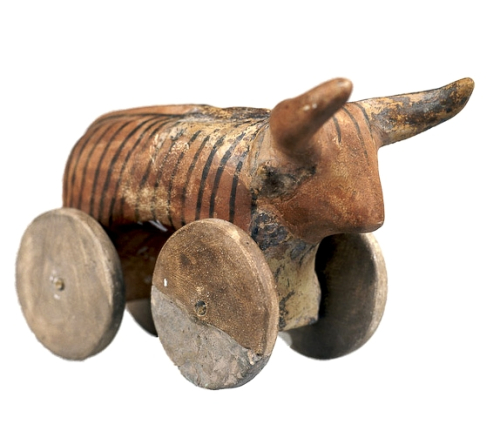
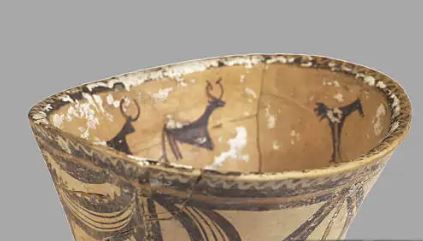
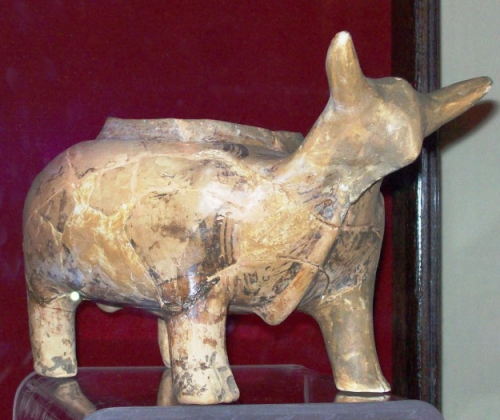
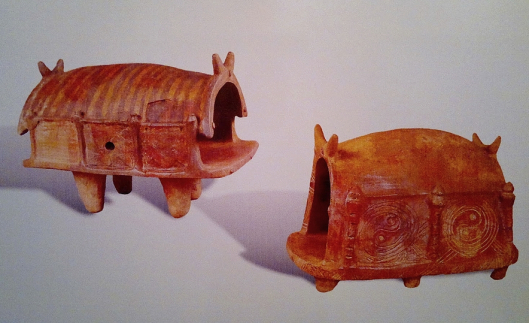
Above: Clay artifacts found from Trypillian diggings in Ukraine, Moldova & Romania
Why did the Trypillians continue to reproduce the image of the bull on pots, in small sculptures, and even place bull horns on their houses or symbolised them on miniature models of houses for sacred use?
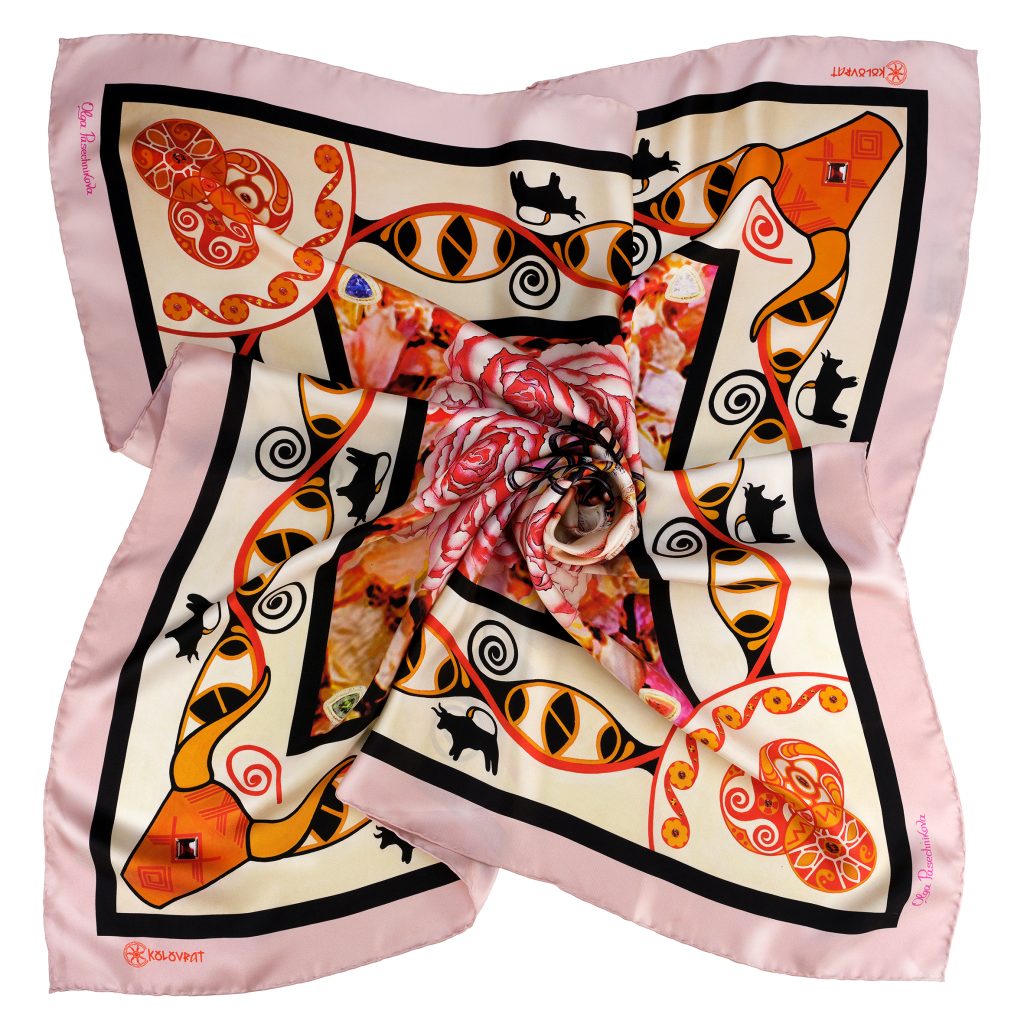
First: the bull as an animal was cherished for its physical endurance, protective strength, and potent fertility. These ornate vessels, often used to store grain and food—the most precious resources—were decorated with bull imagery to invoke protection of their contents and ensure their increase.
But here also exists one more reason for bulls to be a persistent objects of Trypillian households – this will be discussed later in another post in PSICHORA Blog.
To be continued in a Part 2 of the ‘The ideas behind The Beginning silk scarf.
Much love 💕
Leave a Reply